Volunteer’s area – Horse Awareness
Videos, training links and fun to help you learn all about Diamond!
What to wear
Sturdy shoes
- Trainers must not be worn. Volunteers should wear sturdy shoes that protect feet from horse hooves.
Weather Appropriate Clothing
- It can get cold in winter, but you get warm leading.
- Layers are recommended.
- Shoulders must always be covered – no strappy/vest tops.
Hair tied up
- If hair is shoulder length or longer, it must be tied up.
Avoid strong perfumes
- These can be upsetting for some participants.
Be aware of hanging jewellery
- These can get caught or be grabbed
Riding hats must be worn when bringing horses in from the field or turning out
- Hats must be standard specified with Kitemarks
Working safely around horses
- Horses are gentle but large and unpredictable animals.
- Always stay alert and aware of your surroundings
- Only handle horses you are confident and authorised to manage
- Follow instructions from Coaches and Staff at all times
- Avoid sudden movements, shouting, or unnecessary noise
- If a horse becomes loose, stay calm and follow instructions immediately
- Remember RDA horses are still animals not machines
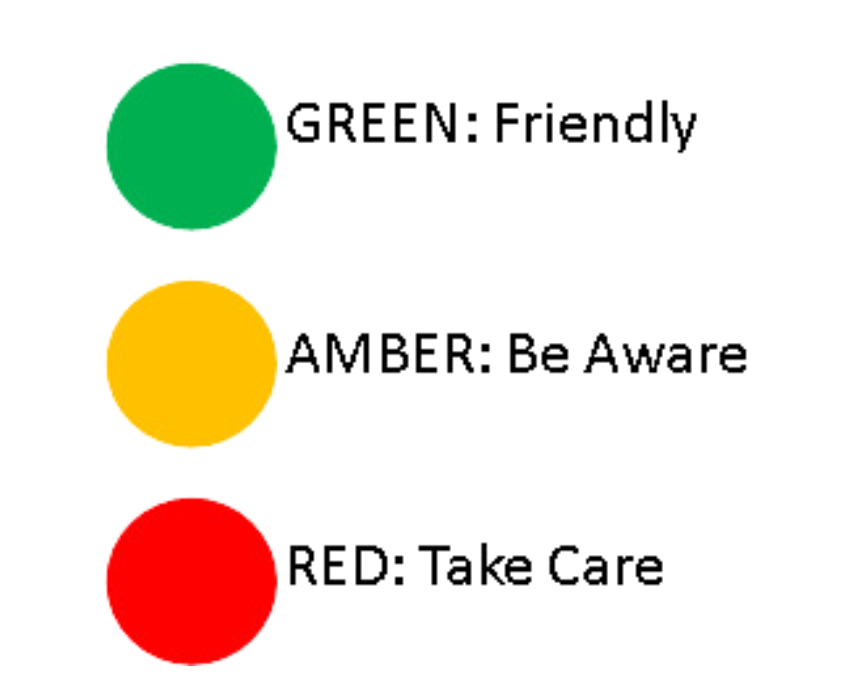
We have a risk assessment for every horse on the yard. This is in the form of a traffic light system.
All of our horses are great at their jobs, but a few have certain requirements and needs. These are displayed on the side of their boxes. If in any doubt, ask a member of staff.
Reading your horse
- Horses can have good/bad days, feel excited, raring to go or ill, tired, lazy
- Try to be aware of the mood of the horse you are handling
- Happy horses tend to be relaxed but engaged, the head will be steady, eyes open, but unfocused, one leg maybe resting & the tail should be relaxed with some casual movement
- A resting horses head will be down, the ears will be at “half-mast” and floppy, the eyes droopy, the muzzle slack, legs inactive and the tail low and still
- An angry horses neck will be outstretched and “snaky”. Ears will be pinned, eyes closed to slits, muzzle tense and pursed. Legs stomping, striking, kicking. Tail swishing
Horse Blind Spots
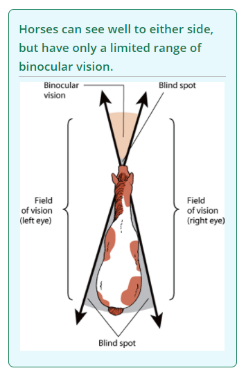
This diagram shows a horses “blind spots” in front of his face and then behind. This is why horses can be startled if you approach them quietly in either directly to the head or from behind.
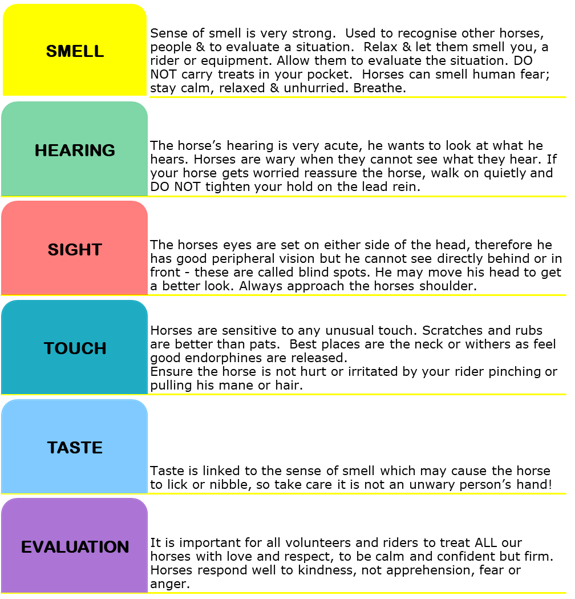
Horse Senses
Horse’s senses are more highly developed and more nuanced than those of a human.
Historically, horses were hunted by other animals, and despite this and being a grazing eater they have managed to survive.
They have good eyesight and a wide range of vision, exceptional hearing, the ability to discern the slightest odour of a predator on the breeze, and the ability to discern the edibility of a plant by a touch of the muzzle all contributed to their survival in the wilds.
Horses Natural Instincts
Horses left in their natural state would live in a herd. They would stay together finding food and water. Rolling would help to remove loose hair, while mud and grease would act as a protective barrier against bad weather.
Although horses tend to be sociable, all herds have a pecking order. If they feel threatened by a higher ranking horse or a horse they haven’t met before their natural reaction could be to kick.

Being Safe Volunteering
- Concentrate on your horse and rider
- Please chat during breaks, not in the lessons
- Horses will pick up on your emotions, try to stay calm and confident
- Listen – in lessons and on the yard – staff may see danger before you
- You will be given a green card when you start volunteering where you will get signed off to do various tasks, remember to get these signed off as you go and only do what you feel safe doing – if you feel tired, ill, unsure – tell us
Mobiles
- Remember to switch your mobile to silent or vibrate
- Only use your mobile when off the yard and not in the schools
- Never check your mobile while leading, swap if necessary
Policies & procedures
- Data Privacy Notice
- Data Protection and GDPR Policy
- Cookies Policy
- Website terms of use
- Code of conduct
- Safeguarding
- Horse Riding Policy for Individuals
- Complaints handling
- Health and Safety Policy
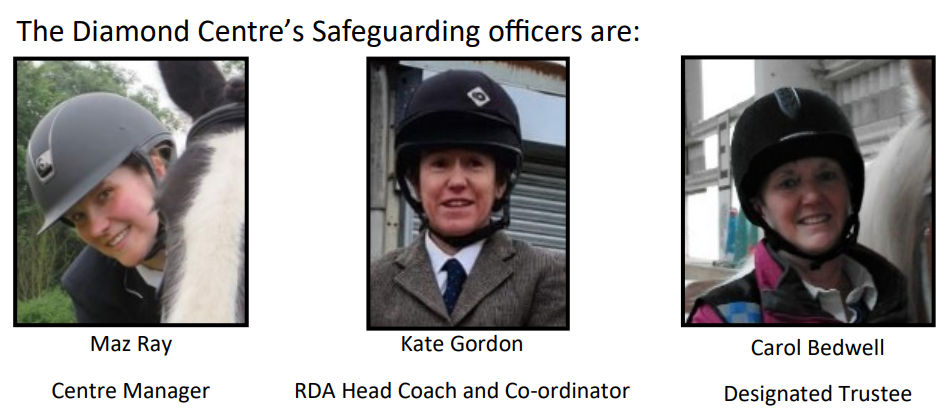
Click the image for more safeguarding infomation
Contact us!
020 8643 7764
The Diamond Centre for Disabled Riders
Woodmansterne Road,
Carshalton, Surrey, SM5 4DT
https://what3words.com/modest.cheese.basket
(please note, if you are travelling to us we are in the LEZ & new ULEZ zone)
Other important info....
Registered charity number: 1045970.
The London Borough of Sutton, Animal Activity License, Hiring out horses, Licence Number: 22/00380/RIDE